«Haven dressed with the glow of muses…»
How many blissful revelations
The spirit of enlightment hides!
И опыт, сын ошибок трудных,
And then experience born of lapses
And genius antinomy-wise
And chance, the heavenly inventor...*
*https://pranava.livejournal.com/3510.html
wrote by Alexander Pushkin
A series of captivating Pushkin Days has passed at NSU in the Scientific Library. Full of our common "undertakings" – with the participation of the Department of History, Culture and Arts of the Humanitarian Institute of NSU.
What a wonderful chord sounded June 6 Holiday, full of enchanting sounds of poetry and music! This day began with the Poetry Marathon "Reading Pushkin Together". If a cat entered the fiction lending library, there would be not enough room to swing it. Thus, the hospitable library space was filled with first-year NSU students, no less respectable gymnasium students, teachers and librarians.
Everyone in a circle read from "Eugene Onegin" – whoever liked what. And this is a special charm: not the usual chronology of the plot, but some new context, a look that is born here and now, momentary nuances. The discovery was made by Natalya Yuryevna Bartosh – the leader, or rather the soul and heart of all these beautiful days.
N. Yu. Bartosh heads the Department of History, Culture and Arts. She is a candidate of philological sciences, is active in teaching, conducts open lectures, cultural and educational meetings at NSU: in the library and cultural centers of Akademgorodok. The area of her scientific interests is impressive: from Russian literature and art of the Silver Age, literature and art of Ancient Russia to modern mythopoetics in the works of Oscar Wilde.
Thanks to Natalya Yuryevna, her faith in the high meanings of culture, enthusiasm and organizational talent, these Days came true.
Then it was time for the Musical quiz "Music is inferior to love alone... ". We can happily say that the participants found themselves in an absolutely extraordinary atmosphere, full of Pushkin's lightness, charm, play and deep knowledge.
The real queen of Pushkin's musical "ball" was Maria Alexandrovna Timofeeva, senior teacher of the department. Of course, such fascinating, masterfully prepared material served not only to develop "crossword" erudition, but also to internal, subtle contact with Pushkin's poetic system, with musical culture.
Whimsically conceived questions were recreated in the melody of Maria Alexandrovna's speech, in the sounds of her playing the piano, in the illustrations on the screen. The audience guessed the questions of the quiz, joining in a kind of game. There were no indifferent. Wonderful teams of philology students, gymnasium students of gymnasium No. 3 and Gornostai gymnasium, our librarians – everyone really enjoyed it!
I would like to repeat after Alexander Sergeevich:
"Music is inferior to love alone
But love is also a melody".
The current Pushkin Days are bright events, feelings in the overall picture of university and library life. All involved, both young and adults, were involved in the sublime, many-sided Pushkin's worlds, growing – like a true classic – with new meanings. Let us note the invaluable contribution of these Days to university cultural education. A multifaceted series of lectures on Russian poetry and culture was addressed to students and schoolchildren.
The opening of the NSU Pushkin Days took place during the first lecture by N. Yu. Bartosh "Pushkin's Tales in Painting, Music and Cinema".
The next lecture by M. A. Timofeeva was devoted to such an inexhaustible topic as "Pushkin and Mozart".
M. S. Berendeeva, candidate of philological sciences, presented her audience with a lecture "The concept of "Pushkin" in cinema and animation".
The cycle of these wonderful meetings was completed by N. Yu. Bartosh's lecture "He conquered both time and space": Pushkin and the Russian Silver Age.
The whole June action took place "with the glow of muses", in the beautiful book fields and spaces of the Fiction Department of the NSU Scientific Library.
Turning to the immortal Pushkin era and peering into the faces shining with youth, we are trying to see the main thing, to catch the main meanings. Where does history end, where does the future begin? Words, colors, melodies of the past and present highlight the future in a special way...
And peaceful bliss corner
Cloaked the night in darkness,
The fire goes out in the fireplace,
And the candle burned...
Alexander Pushkin
The text: L. Ya. Distanova
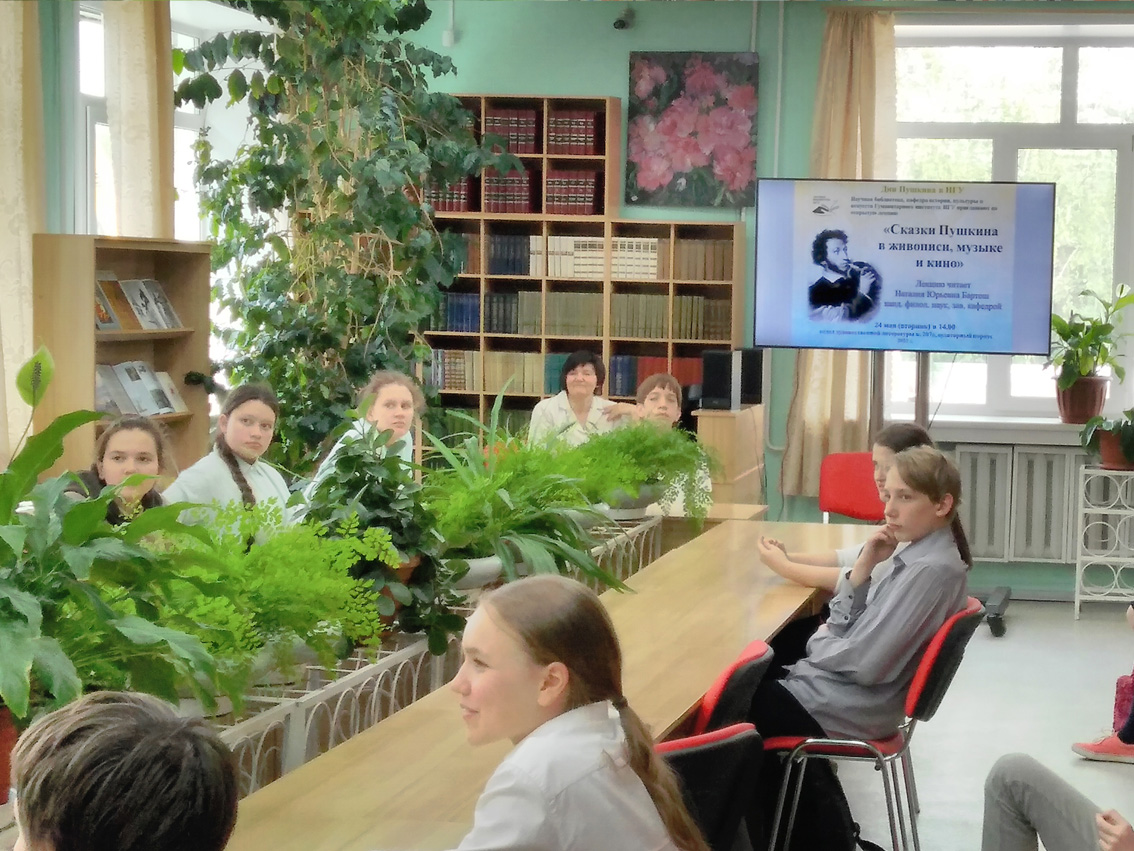
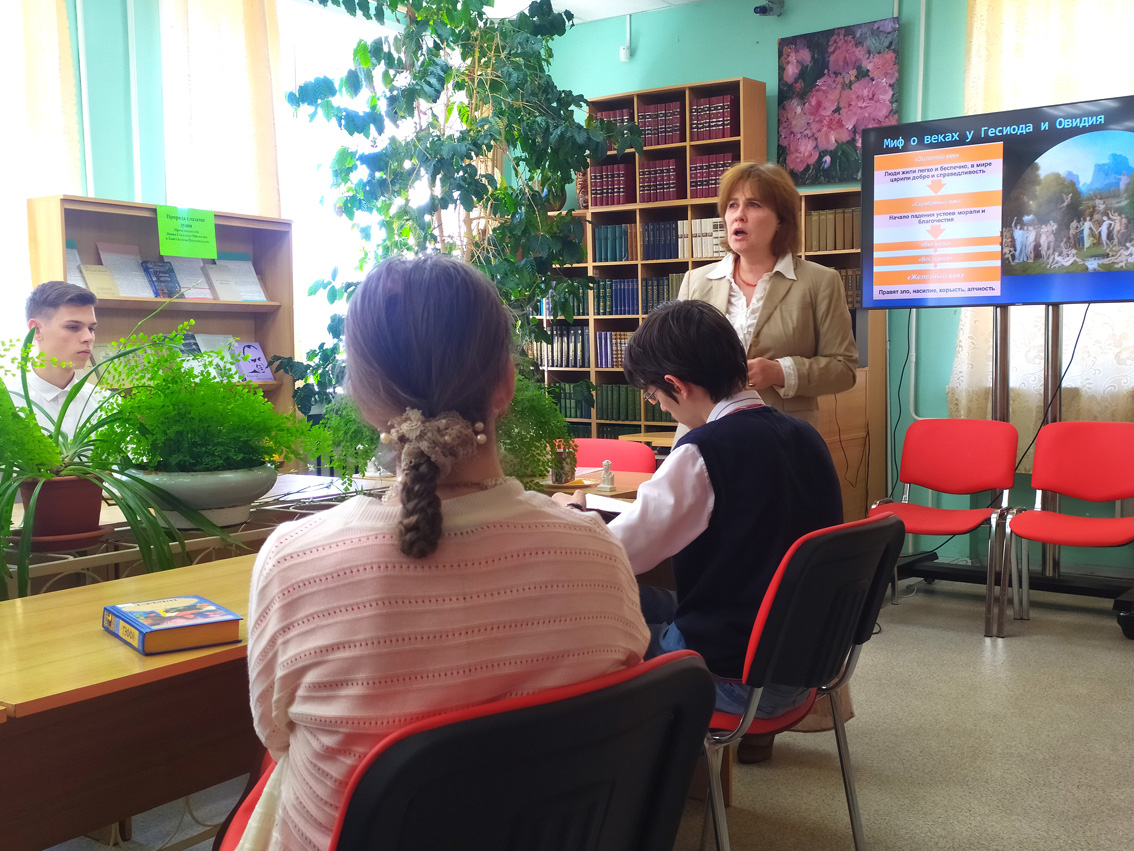
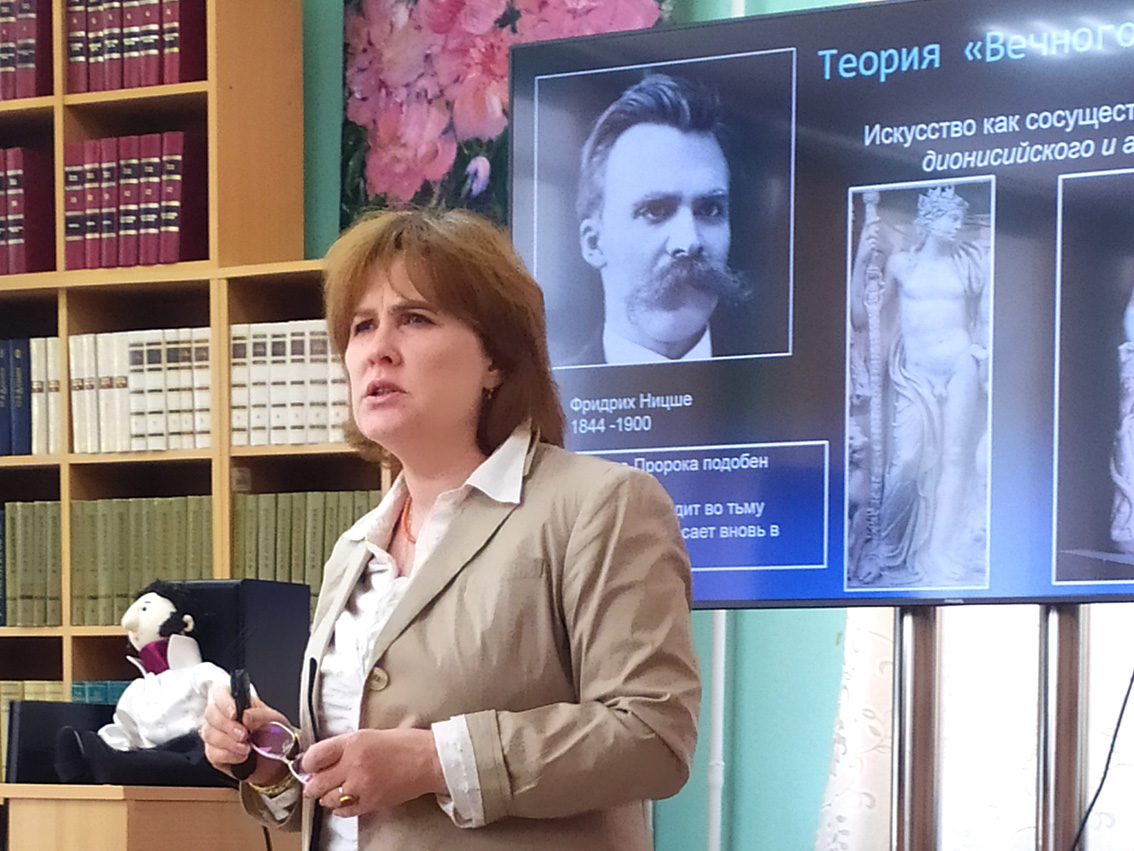
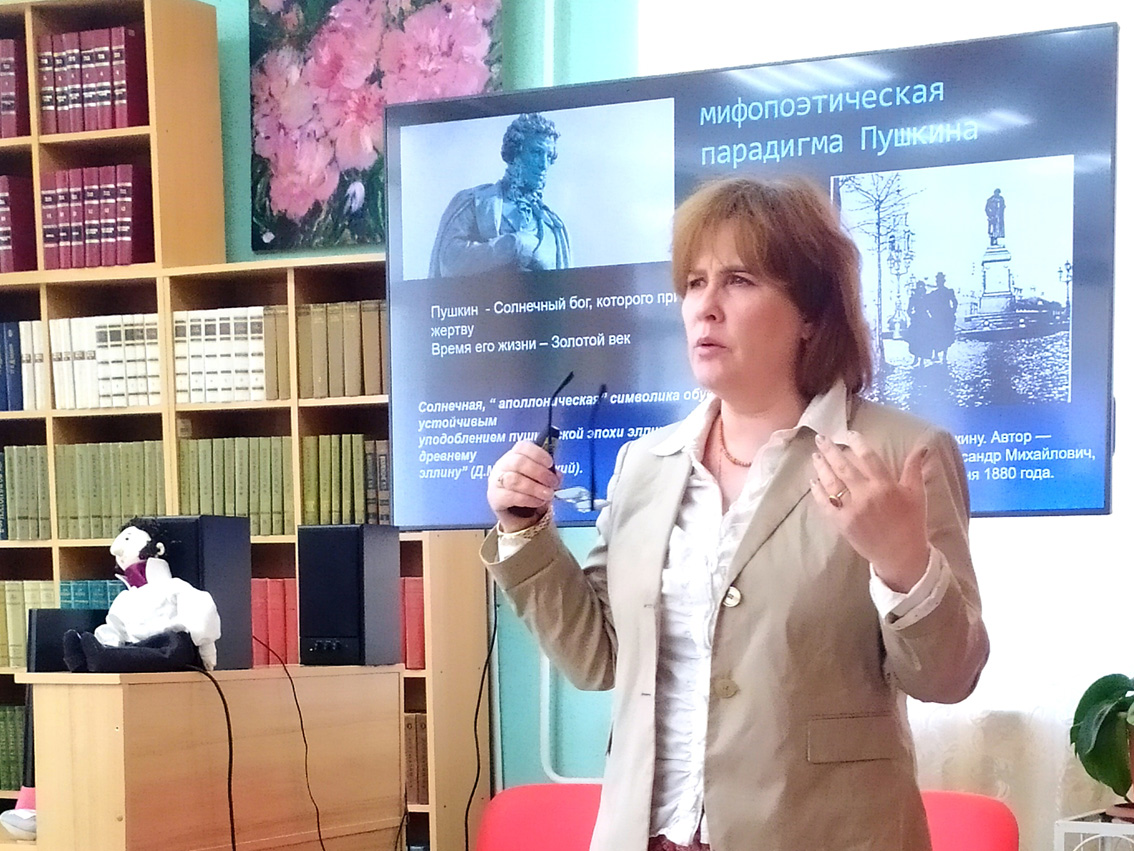
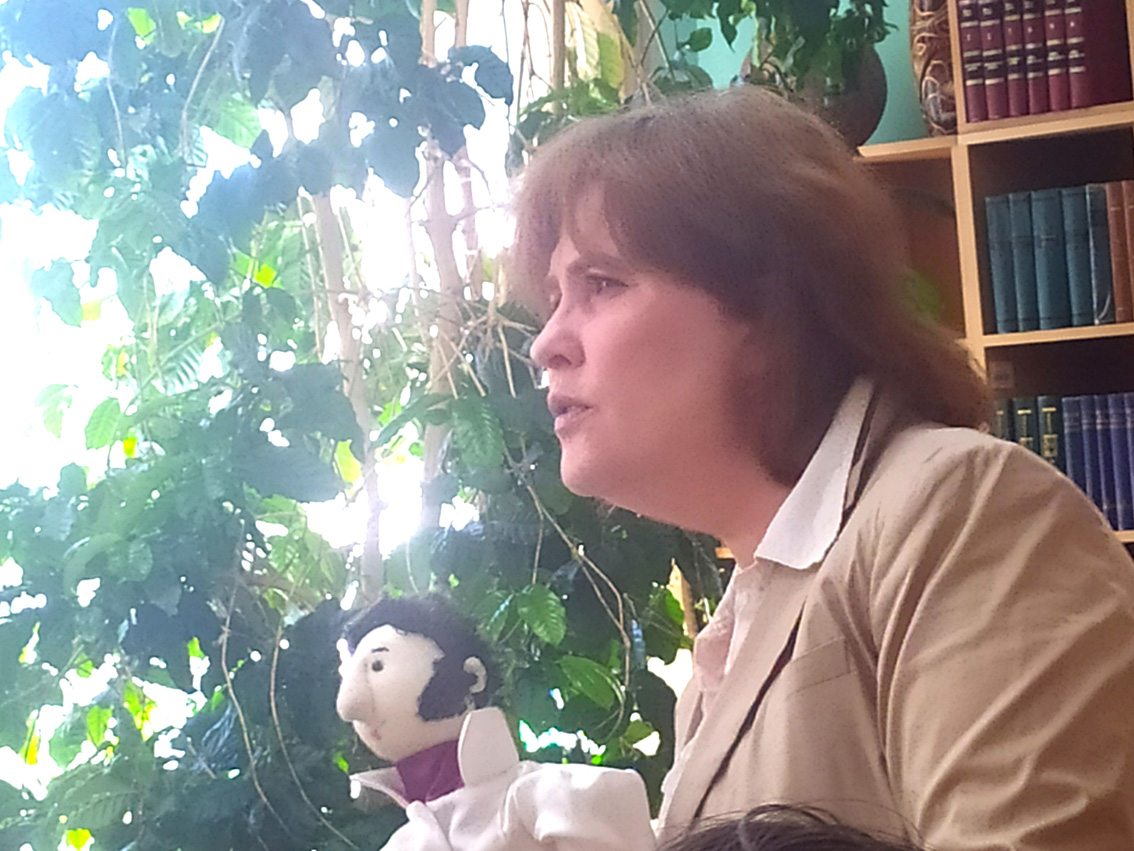
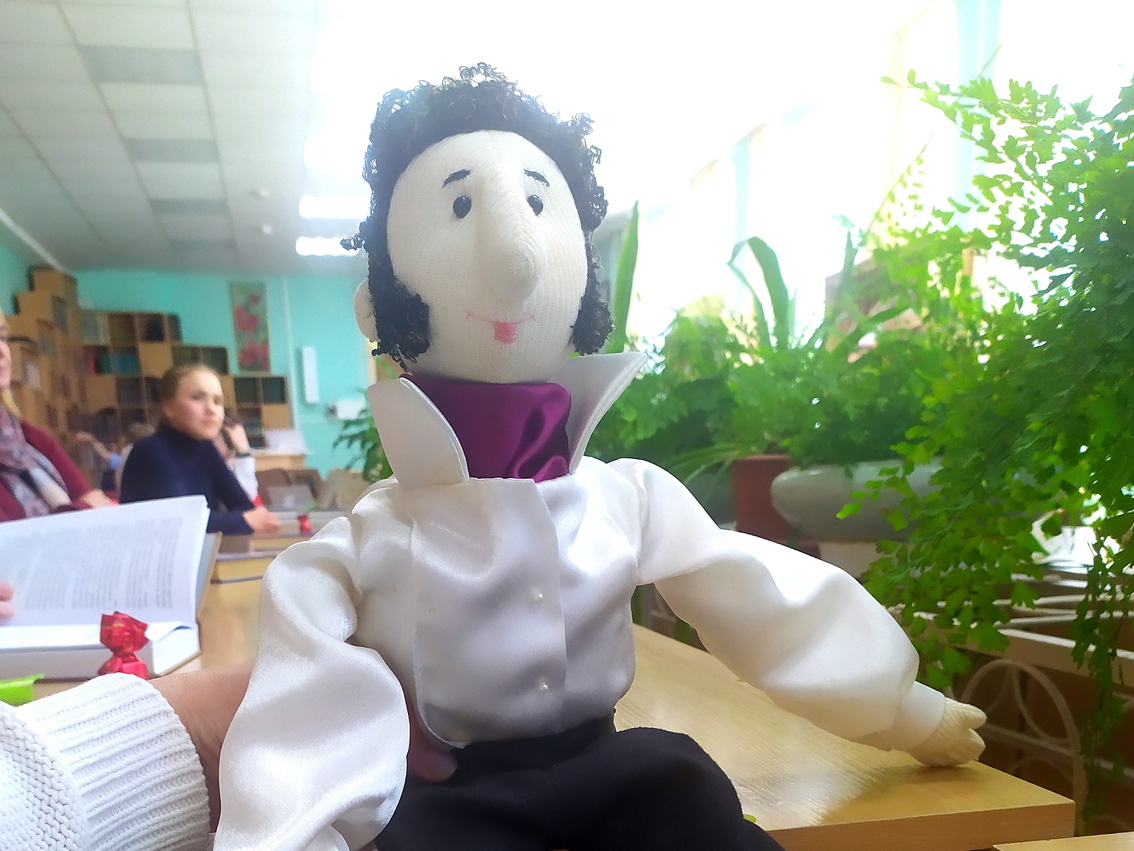
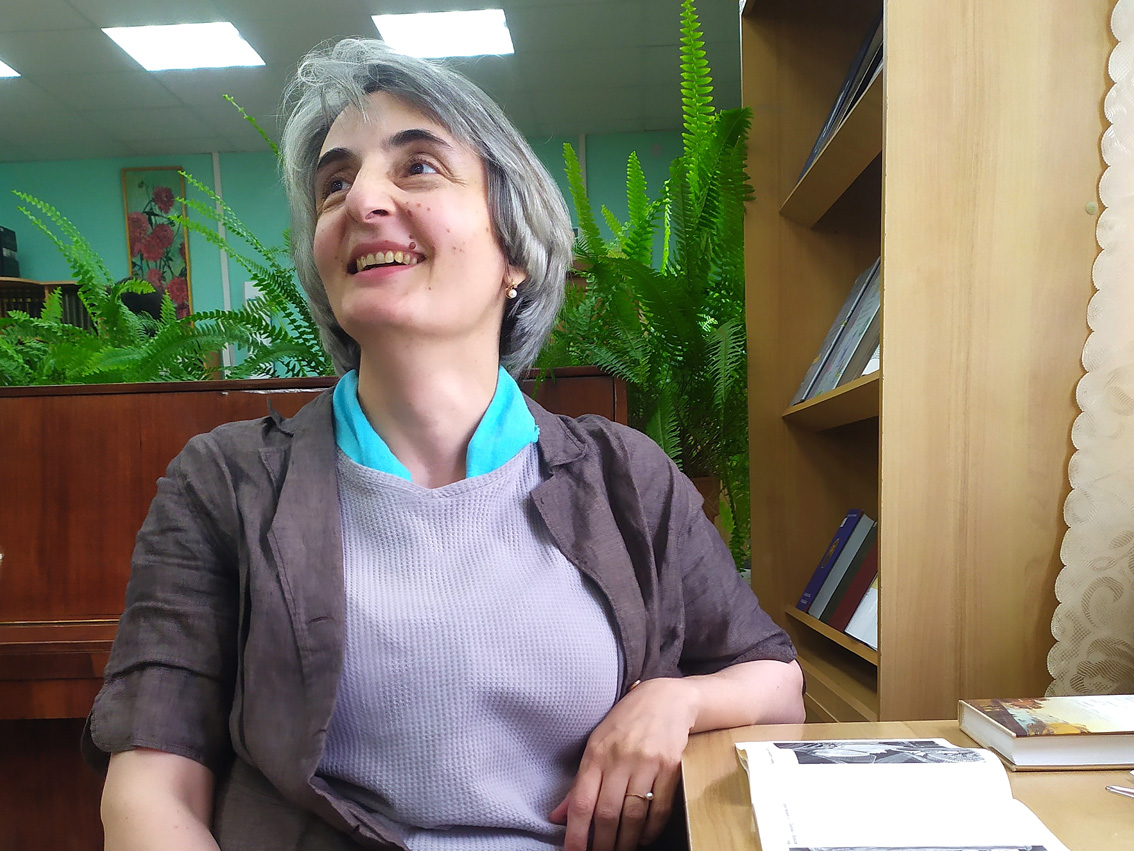
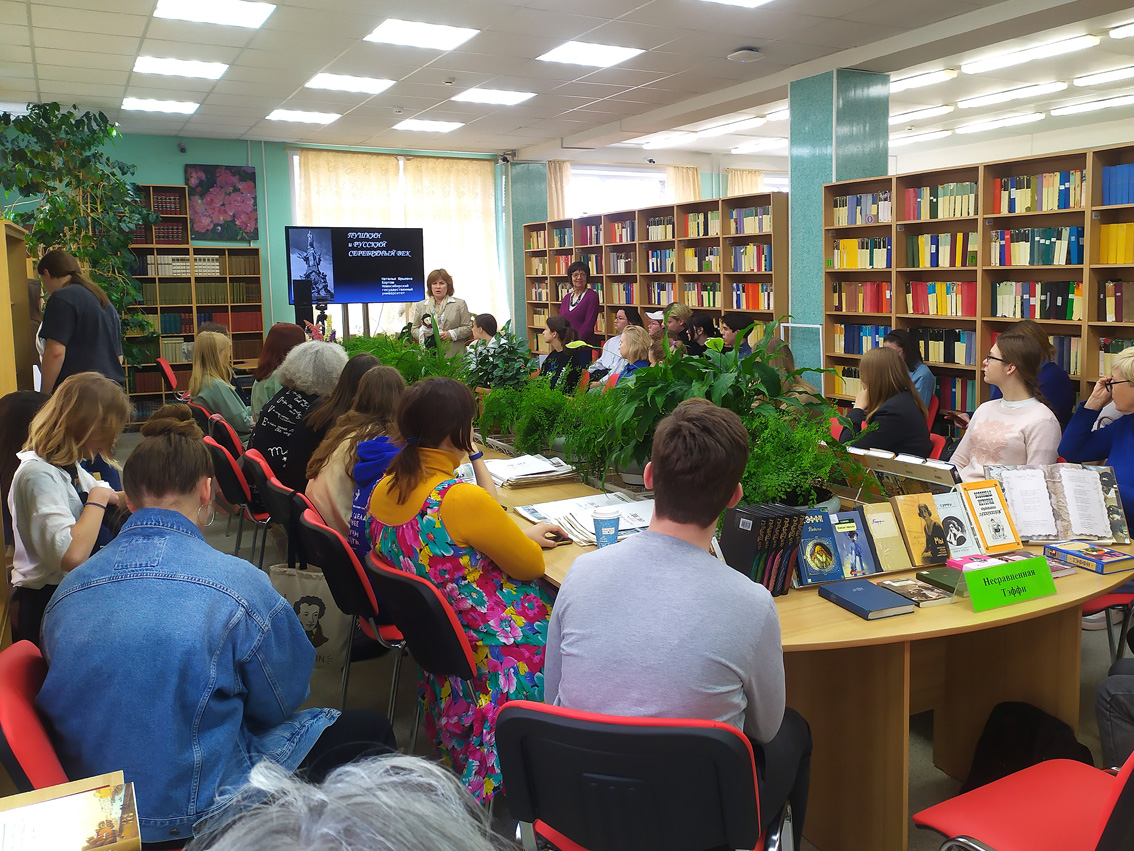
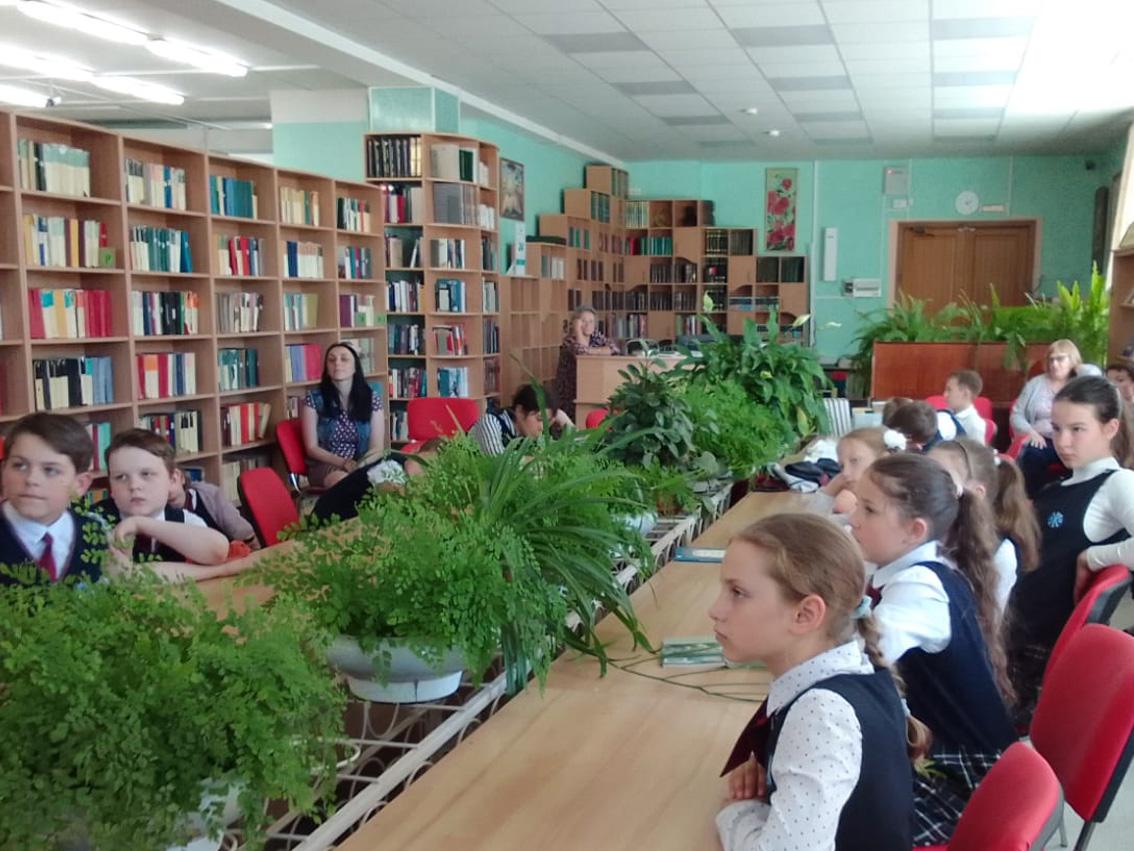
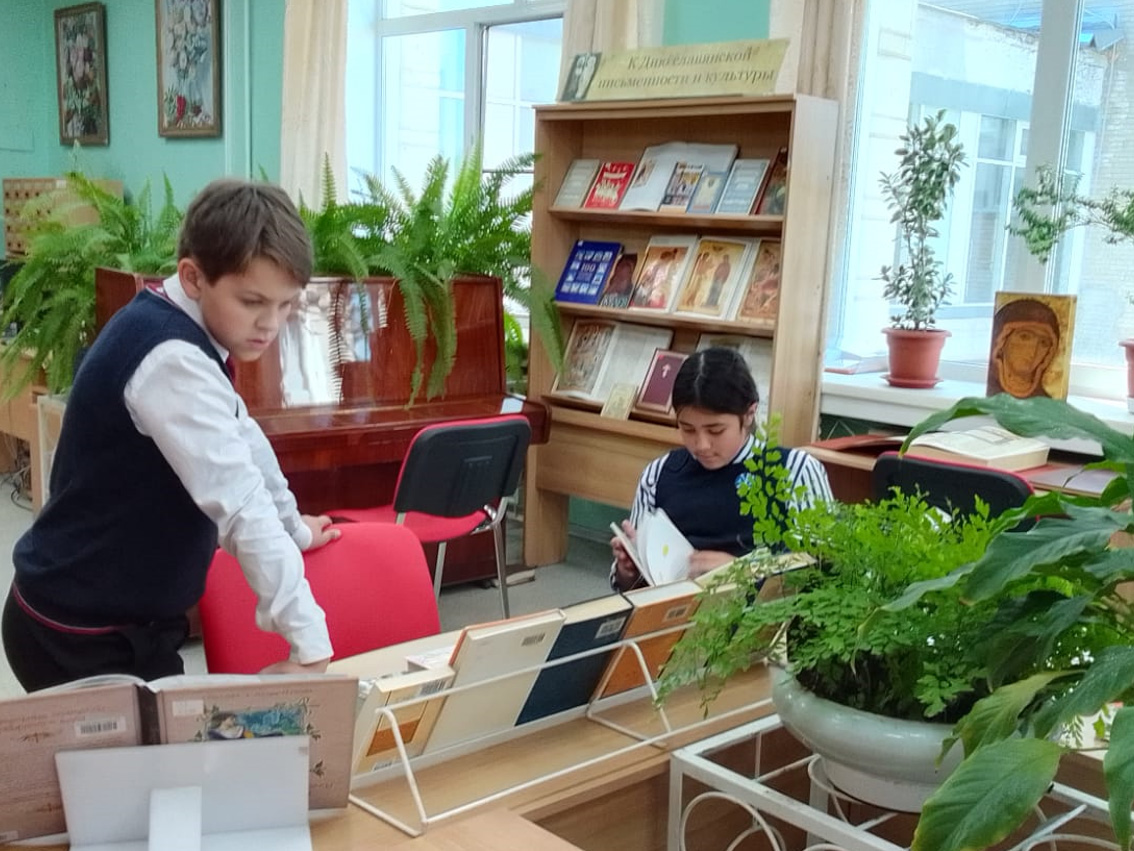
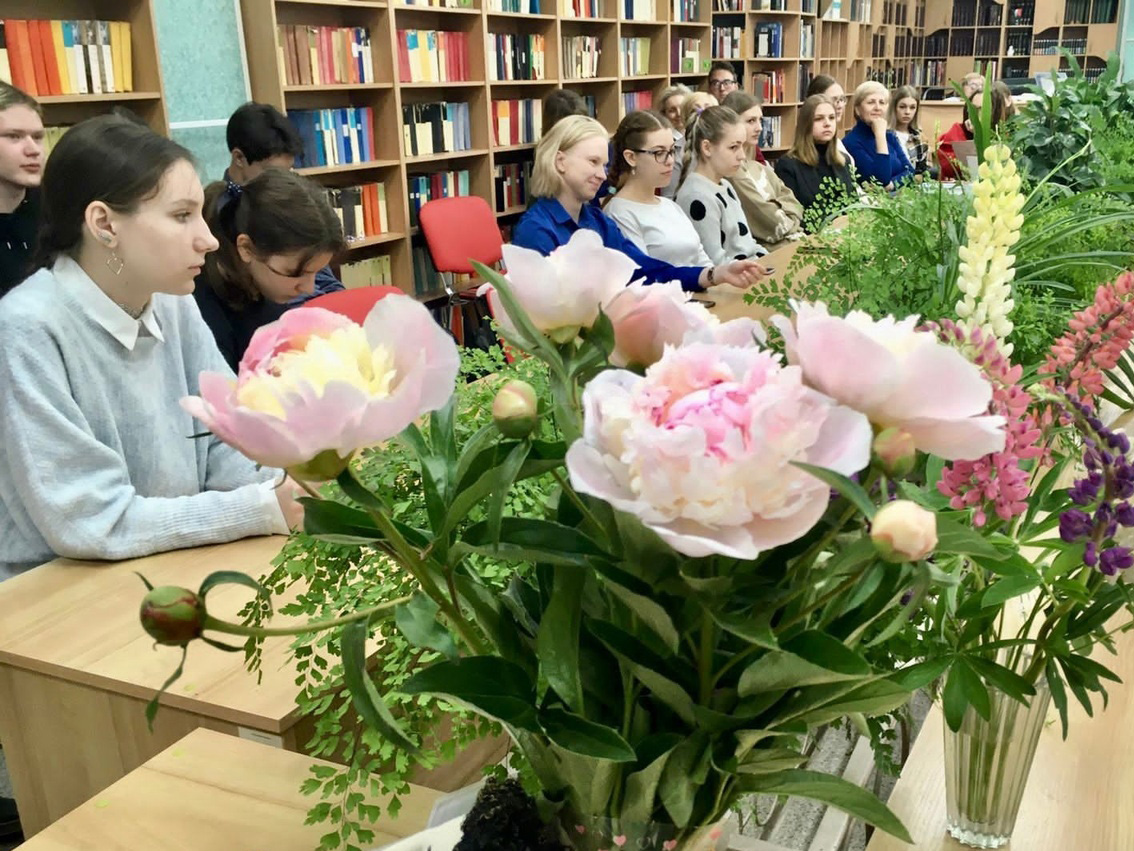
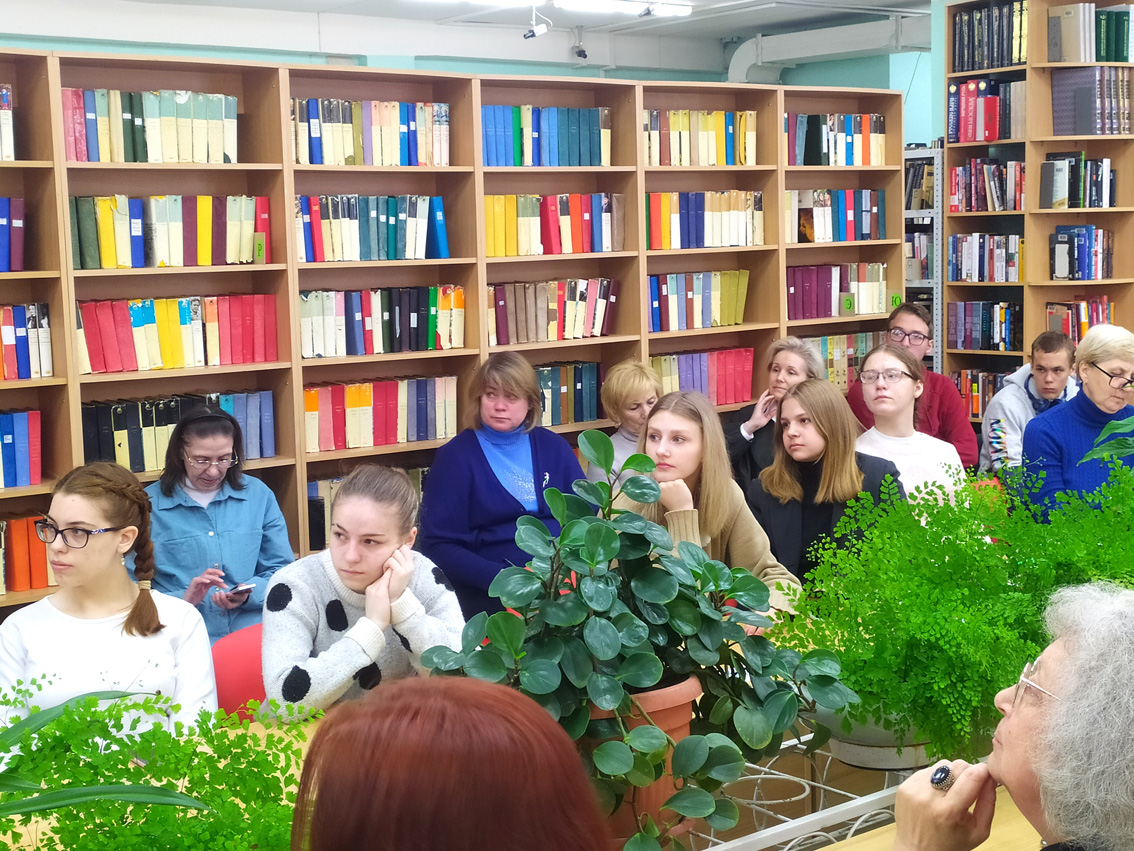
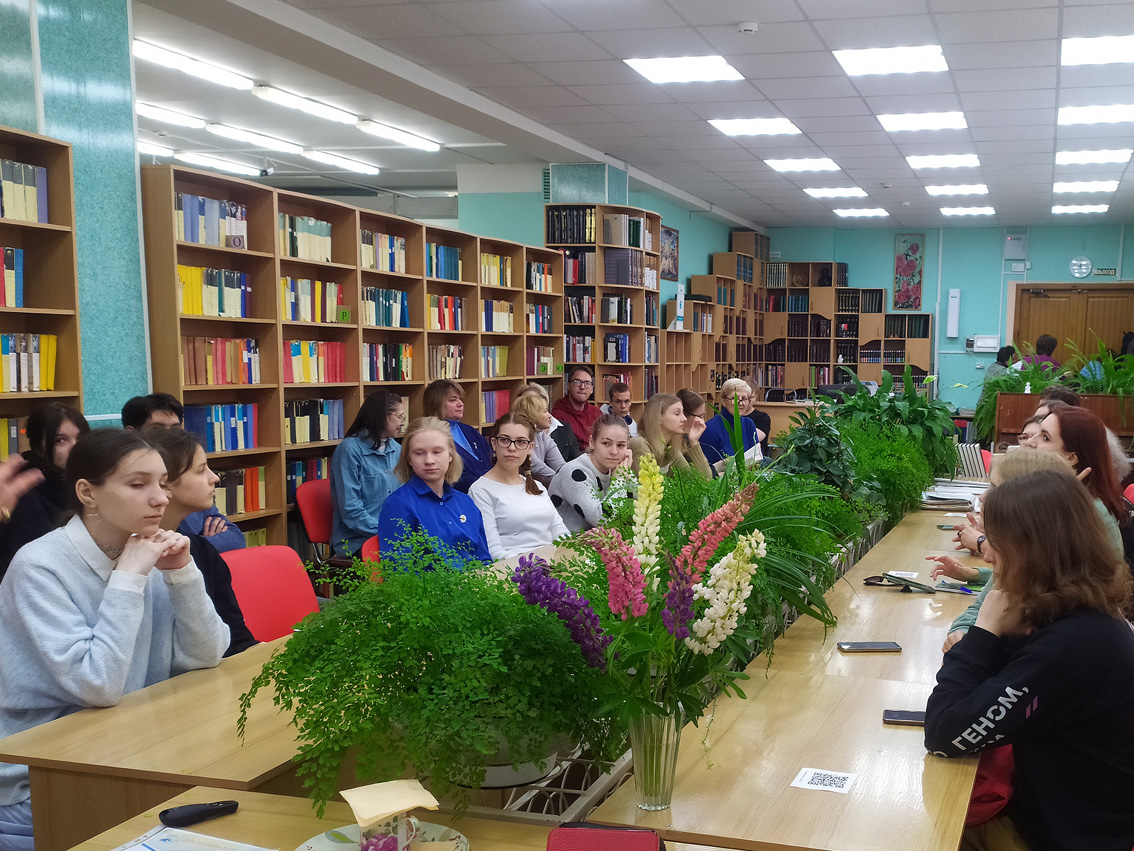
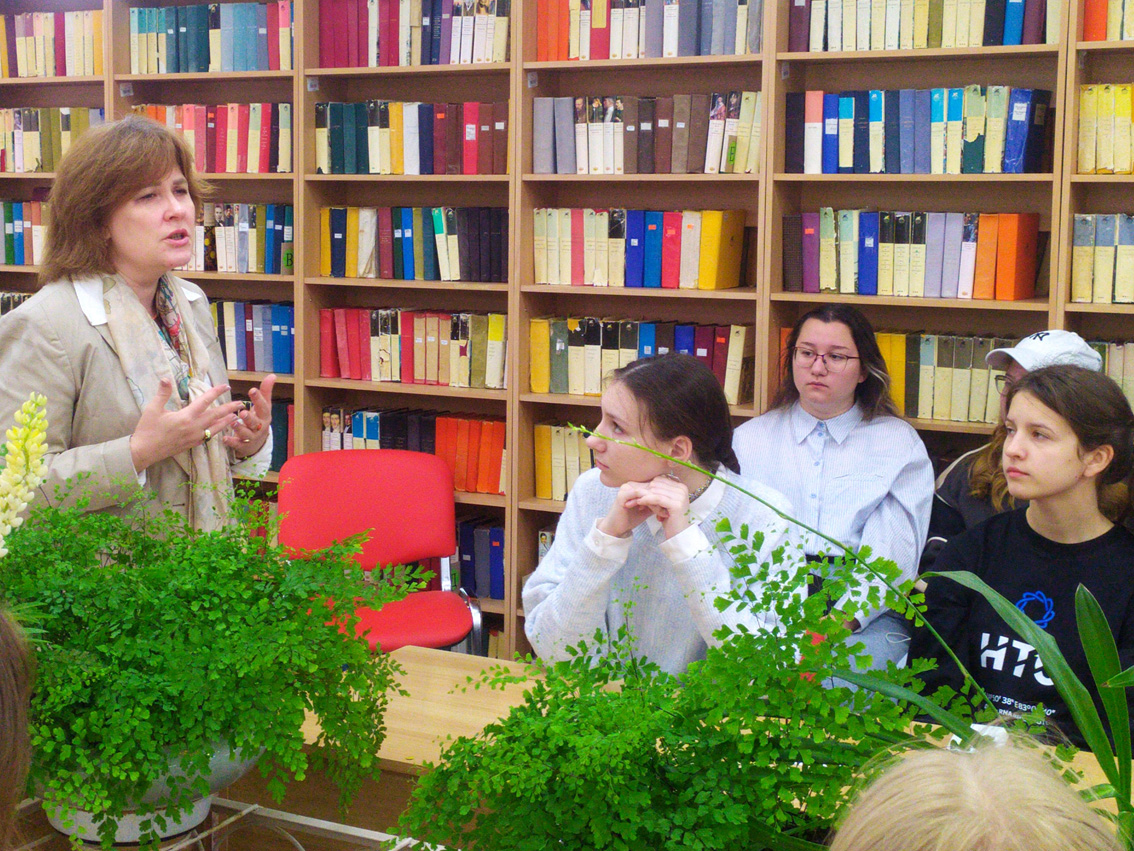

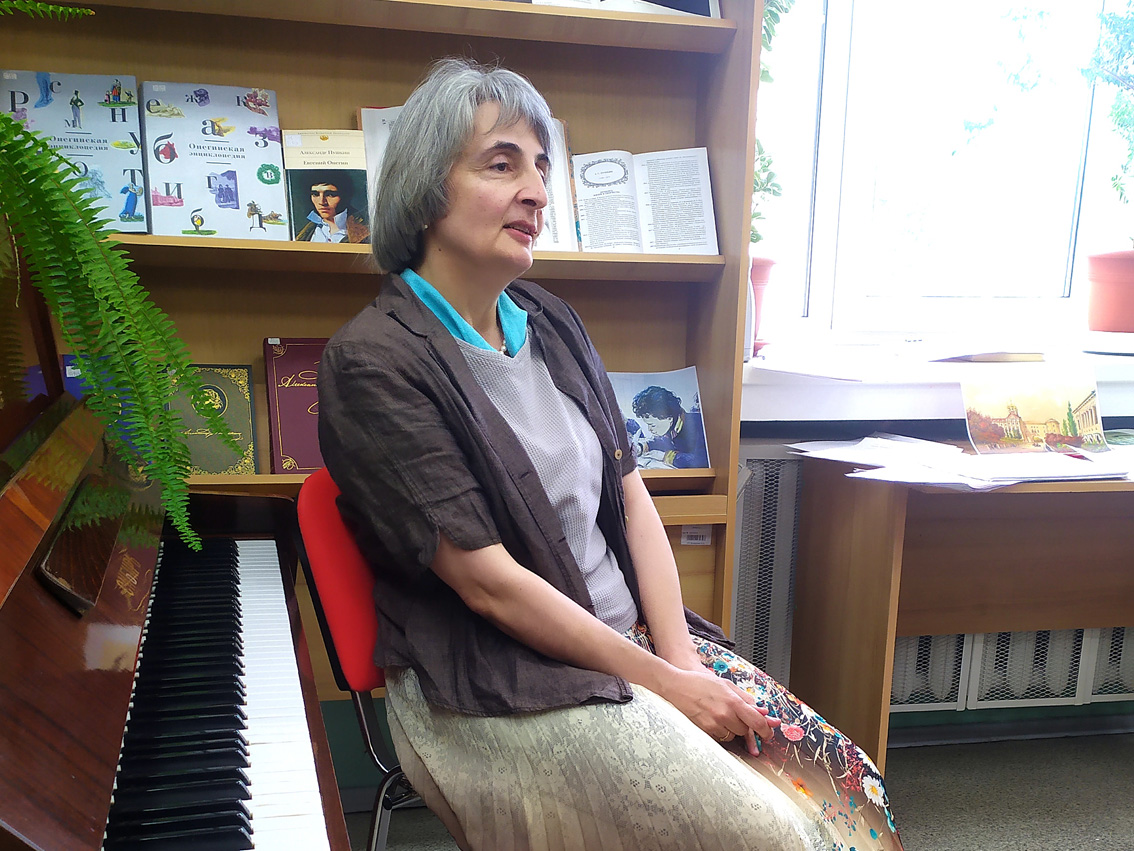
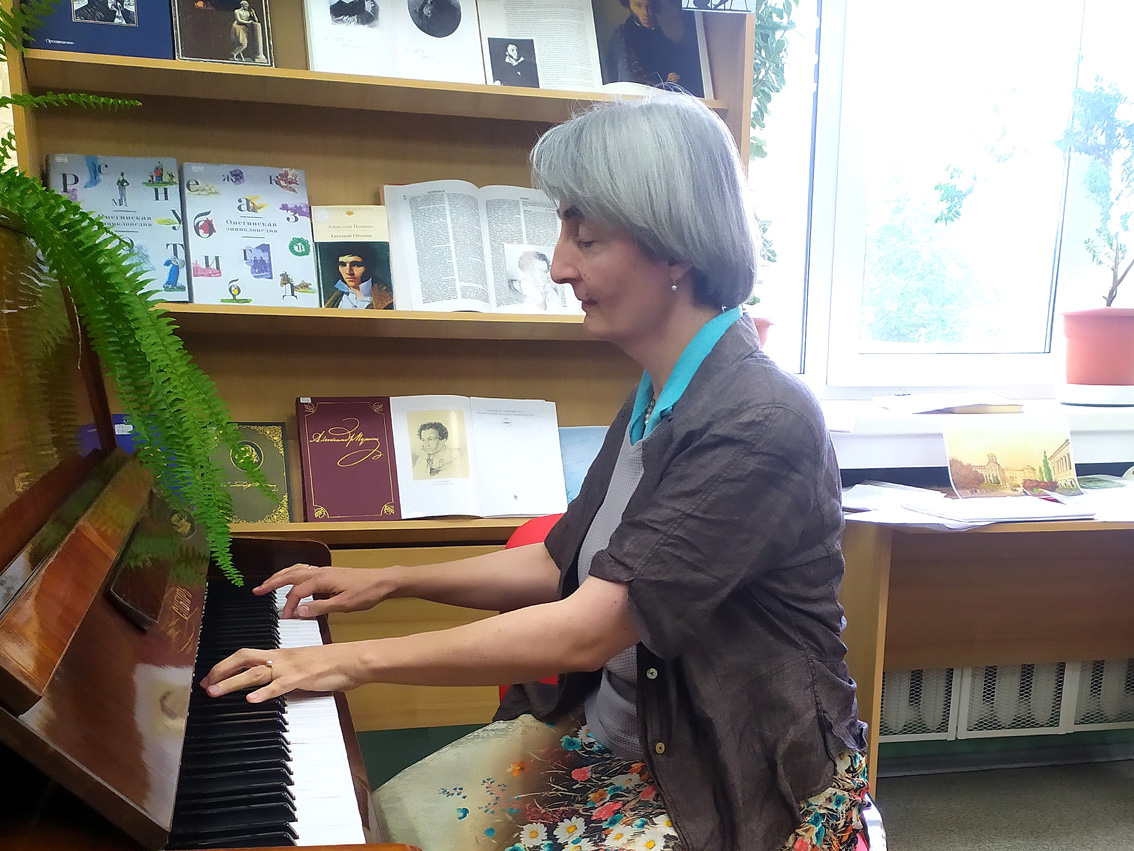
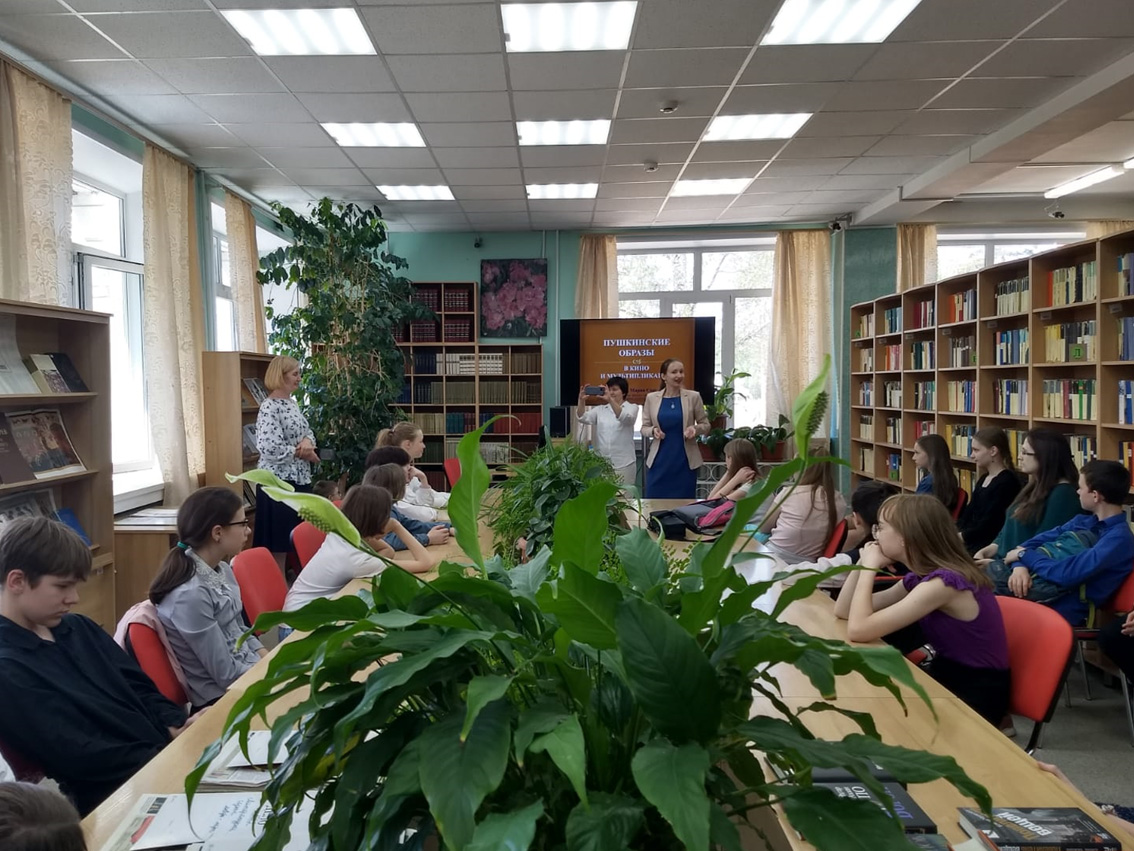
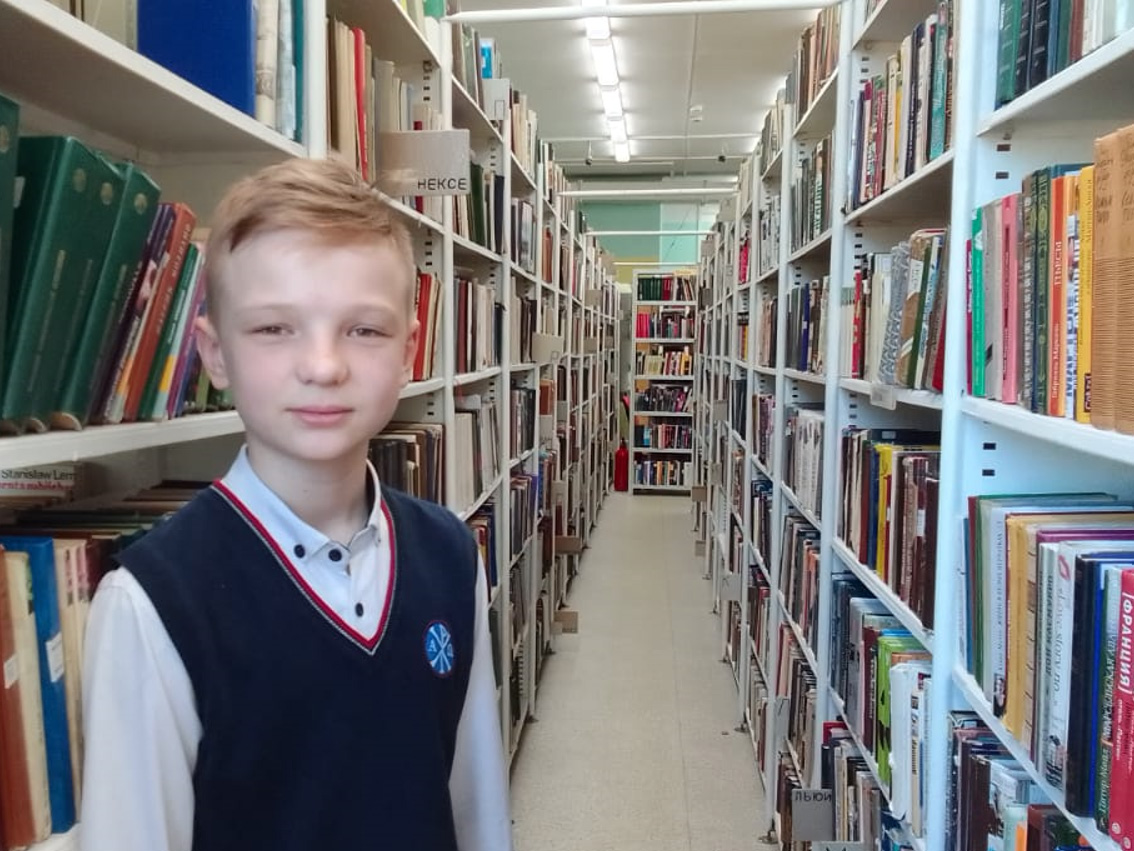
Foto: E. I. Vaganova; N. V. Koval
Report by Agasha Kulikova
Since May 24, 2022, a series of events has been held in the Fiction lending library of the NSU Scientific Library as part of the "Pushkin Days". Today we are summing up some of the results of the meetings of young readers from the Orthodox Gymnasium in the name of St. Sergius of Radonezh with teachers from the Department of History, Culture and Arts of the Humanitarian Institute of NSU.
On May 24, on the Day of Slavic Literature and Culture, Natalya Yuryevna Bartosh was the first to tell fourth-grade students about Pushkin's fairy tales in painting, music and cinema. It was no coincidence that this date was chosen – after all, Russian culture, as well as the modern literary Russian language, is unthinkable without the creative heritage of Alexander Sergeevich.
As Ivan Alexandrovich Goncharov, a Russian writer, corresponding member of the St. Petersburg Academy of Sciences in the category of Russian language and literature, said: "Pushkin is the father, the founder of Russian art, just like Lomonosov is the father of science in Russia. All the seeds and rudiments are hidden in Pushkin, from which all kinds and types of art later developed in all our artists".
On May 25, a lecture by Maria Alexandrovna Timofeeva "Pushkin and Mozart" was held for eighth grade students.
A professional pianist and author of the course "Music in the Space of Culture", Maria Alexandrovna offered young readers to consider the text "Mozart and Salieri" from the cycle "Little Tragedy" with musical accompaniment in the form of excerpts from the works of the immortal composer.
Who is he – a holy fool in the world of pompous Viennese nobility, a "madman" and an "idle reveler" or a genius with a difficult fate, a god of music, capable of creating an affectionate and formidable element from a simple scale?
Why are we chasing popularity and success that dissolve in time, and why are memory and fame so capricious that deceive our hopes? What is the relationship between reality and fiction, if fiction sometimes becomes more alive than reality itself? And can villainy be justified – after all, both Mozart and Salieri live in each of us, inspiration and envy, the spirit of creativity and destruction?
Before young listeners, these and other questions arose in the frame of the "first accords of Iphigenia" of "Iphigenia" by the great Gluck, the piercing "Lacrimosa" from Mozart’s "Requiem", and, of course, "Tarar" by Salieri and the overture of "Don Giovanni" with its ascending scale – in proof that true genius lies in simplicity.