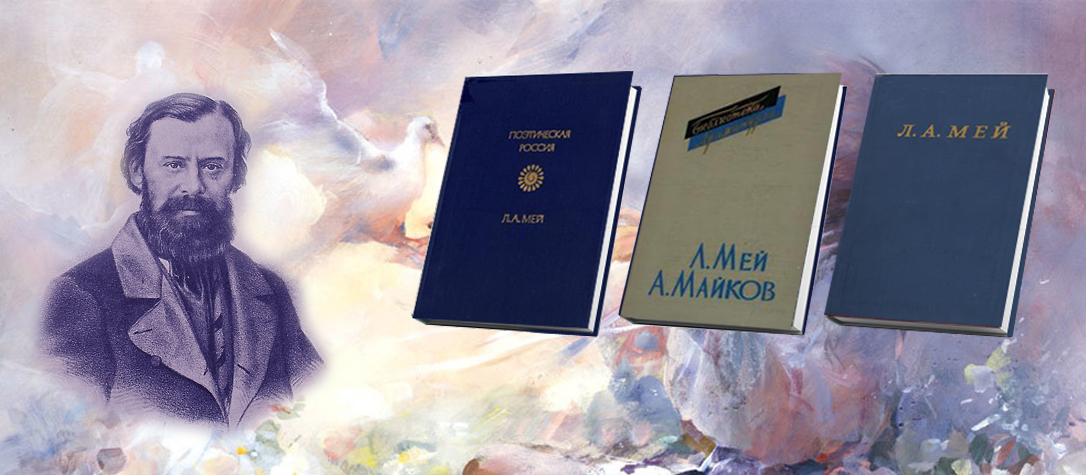
Be with the music
Music and poetry are similar to each other. Both develop the imagination and arouse a sense of beauty, play on the strings of the human soul and create a special subspace in the mind. Even a person who is indifferent to other arts becomes receptive to beauty when he experiences emotions under the influence of poetry and music. This is how empathy for the shades and nuances of the emotional-sensual sphere arises.
The 20th inherits the 19th century in the search for a synthesis of the arts, reflected in the works of German romantics and French symbolists, as well as in the works of theoretical scientists such as A. Schopenhauer, E. Hanslick and A.V. Ambros. This reveals the parallelism or even the identity of the basic meanings of musical and poetic figures in the use of synonymous structure and dramaturgy, the similar work of repetitions and contrasts, as well as the general principle of constant development.
Literary musicality comes from euphony, alliteration and assonance, rhyme and rhythm, rehearsal of sounds, words, meters, phrases and ideas. On the tip of a pen that writes down poetic lines and musical phrases, a universal language of songs, romances and operas is born. Let's go to one of these worlds and touch the fabric of its synthetic, fragile reality.
Clouds are gathering over the house of the Novgorod merchant Sobakin. The daring oprichnik Grigory Gryaznoy fell in love with his daughter Marfa. But she cannot be his bride: since childhood, Marfa has been promised to another. In desperation, Grigory turns to the power of a love spell, and his former lover Lyubasha decides to poison her rival. The threat of a witch's potion is hanging over poor Marfa’s head. At this time, Ivan the Terrible decides to choose a bride for himself...
The first notes of the light theme of the overture sound like a gentle sun rising from the horizon. It is Marfa, who has not yet known grief, who has not experienced the blows of fate, enters the chamber with a light step. But the strings of the main theme menacingly argue with it. The reader, of course, has already recognized this musical dialogue that precedes the first act of Rimsky-Korsakov's opera The Tsar's Bride. But does he know that it was in association with the musical genius of the composer that the unfading star of Lev Alexandrovich Mey was born?
An original poet and translator and an excellent connoisseur of the Russian language, from whom Gorky himself advised young poets to learn, he wrote the following thing about the information that has come down to us about the family life of our ancestors: "In our annals there are only bare facts <...> and very little about the inner life of the people . It remains to recreate it by analogy with the current life <...>, there is still a verbal chronicle passing from generation to generation: proverbs and songs. Dead, barely noticeable in the annals, the Russian woman is in the song a living, everyday mover of passion. Here she is either a fierce mother-in-law, or a sad daughter-in-law, or a beauty, from which the heart burns with fire, or a dissolute wife". May's lively interest in the theme of Russian folk art and folk poetry, love for the way of life that is fading into the past forced him to turn to historical dramaturgy. Using such features of female song images as, on the one hand, timidity, shyness and obedience to the will and fate of the father, and on the other hand, waywardness, passion in thoughts, words and deeds, the poet creates two opposite characters – Martha and Lyubasha. Their polar features, manifested in one way or another and in combination, are a Russian encyclopedia of women's spiritual life, an original literary and psychological study of the innermost secrets of the female soul.
The reader is captivated by the subtle lyricism of Lev Alexandrovich Mey, the virtuosity of verse, the vivid imagery of poetic depiction. Many of his other works, also set to music, have become popular songs and romances ("Why did I dream about you…", "I would like to use a single word…", "The Maid of Pskov" – a drama, on the plot of which Rimsky-Korsakov also wrote an opera of the same name) . In his works, the poet turns to the eternal conflict of good and evil, the study of black, deaf, painful human passions, so violently and freely manifested in large and small forms.
February 13, 2022 marks the 200th anniversary of the birth of Lev Aleksandrovich Mey, and we invite readers to the exhibition "Be with the Music", dedicated to the poet’s anniversary. The exhibition will last from February 15 to February 28 (room 201a, fiction lending library) and will feature poems based on ancient and biblical motifs, epics, legends and songs, as well as translations of ancient Greek, German and French poets. Come and discover for yourself the interesting world of the original lyricist – a representative of "pure art", who was appreciated by descendants and immortalized in Russian literature by the union with the musical element.
Text: A. D. Kulikova, fiction lending library
Decoration: O. V. Koshevaya