Galois Theory
The staff of the academic and scientific literature department are preparing a new exhibition for you!
"Revolutionary and Mathematician", оn the 215th anniversary of the birth of the French mathematician Évariste Galois.
"Mathematics is a creation of the human mind, intended more for inquiry than for knowledge; for the pursuit of truth rather than for its attainment." (From the reflections of the scientist Galois on the nature of science.)
Évariste Galois (1811–1832) — the founder of modern higher algebra. His mathematical legacy is not extensive: a few very concisely written papers that were not understood by his contemporaries. Évariste Galois, in essence, constructed the entire theory of finite fields (now known as Galois fields). Furthermore, in his final letter to a friend, he formulated fundamental theorems concerning integrals of algebraic functions—theorems that were rediscovered much later in the work of B. Riemann.
The mathematician’s primary — achievement lies in the formulation of a set of ideas that emerged from his continued investigation into the solvability of algebraic equations by radicals—a line of inquiry initiated by J. Lagrange, N. Abel, and others. The resulting theory—Galois theory—characterizes field extensions in terms of groups, much like the description of the symmetries of a polyhedron; it thereby reduces questions concerning fields to problems in group theory (a field that, in fact, originated from this very work).
You can learn more about Évariste Galois and his work from the literature featured in the exhibition.
Starting October 26, at the academic and scientific literature lending desk (Room 107b, KSP building).
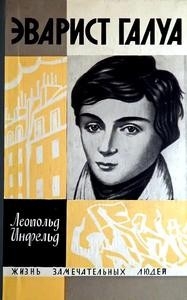 |
Lives of Remarkable People: https://ruslan-neo.nsu.ru/ |
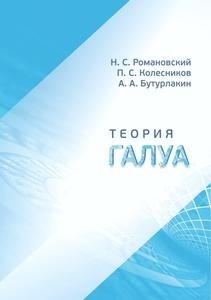 |
Galois theory: https://ruslan-neo.nsu.ru/ |