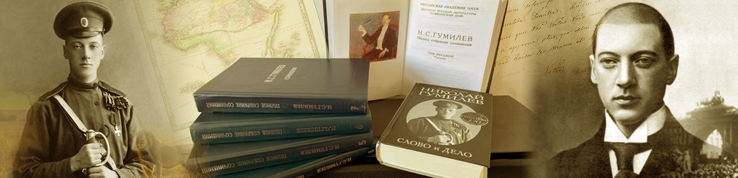
On the 140th anniversary of Nikolai Gumilyov's birth
I think that coming to the exam,
having prepared for it,
it's all the same,
what to play with marked cards.
Nikolai Gumilyov
Nikolai Gumilyov entered the history of Russian literature as the founder of Acmeism, a poet, translator, and art critic. He fought in World War I, received several medals, and traveled extensively. In addition to poetry, his creative legacy also includes ethnographic notes on the lives of African peoples.
Nikolay Gumilyov was born on April 15, 1886 in Kronstadt. He was the third child in the family; he had an older brother and sister. His father served as a ship's doctor, and his mother came from the ancient noble family of Lvovs.
Part of his childhood and youth was spent in Tsarskoye Selo. There he also received a certificate of completion from the Tsarskoye Selo Gymnasium. While still a high school student, his first book of poems was published with funds from his parents «The Path of the Conquistadors» (1905). Gumilev himself later called this book “a student’s book,” but it was this book that opened the way for him to Valery Bryusov and the Symbolists. There he met his future wife Anna Gorenko (Akhmatova), for whom he was ready to commit his entire life of romantic exploits.
In 1911, Gumilyov, together with Sergei Gorodetsky, founded «The poets' workshop», proclaiming a new movement — acmeism (from Greek akme — peak, blooming time). In contrast to the mystical fog of symbolism, the Acmeists (Akhmatova, Mandelstam, Zenkevich) returned to poetry objectivity, clarity and "wonderful difficulty".
During the First World War, Gumilev volunteered (although he had a deferment as a student) and served in the Life Guards Uhlan Regiment. For bravery he was awarded two St. George Crosses (III and IV degrees) and the St. George Medal. He fought on the front lines and ended the war with the rank of ensign. He later said that he did it deliberately — to test the authenticity of his poetry.
Gumilev made four expeditions to Africa (especially to Ethiopia), and the last one - in 1913, on the orders of the Academy of Sciences for the collection of ethnographic collections. They are now kept in the Kunstkamera and the Museum of Anthropology in St. Petersburg. He brought unique materials, drawings, amulets, and his African poems “Mick”, “Captains” and the poem “Mick” became truly exotic in Russian literature.
Vladimir Nabokov called him "a poet not only of Russian, but also of world literature". You can get acquainted with the works of Nikolai Gumilyov at a book exhibition prepared by the library.